Confidence is one of the most important qualities a child can develop. It shapes how they interact with the world, take on challenges, and believe in themselves.
While many activities focus on competition or performance, circus arts offer something different—a supportive and creative environment where children can grow at their own pace.
At The Circus Arts Place, children are encouraged to explore, express, and discover what they’re capable of in a way that feels exciting and empowering.
Why Confidence Matters in Childhood
Confidence isn’t just about speaking up or performing well. It’s about how children see themselves and their abilities.
Confident children are more likely to:
- Try new things without fear
- Handle challenges and setbacks
- Express themselves openly
- Build strong social connections
The right activities can play a huge role in developing this confidence—and that’s where circus arts stand out.
What Makes Circus Arts Different?
Unlike traditional sports, circus arts focus on individual progress rather than competition.
There’s no pressure to win or outperform others. Instead, children are encouraged to improve at their own pace and celebrate small wins along the way.
This creates a safe environment where they can:
- Make mistakes without fear
- Learn through exploration
- Build confidence naturally
1. Learning New Skills Builds Self-Belief
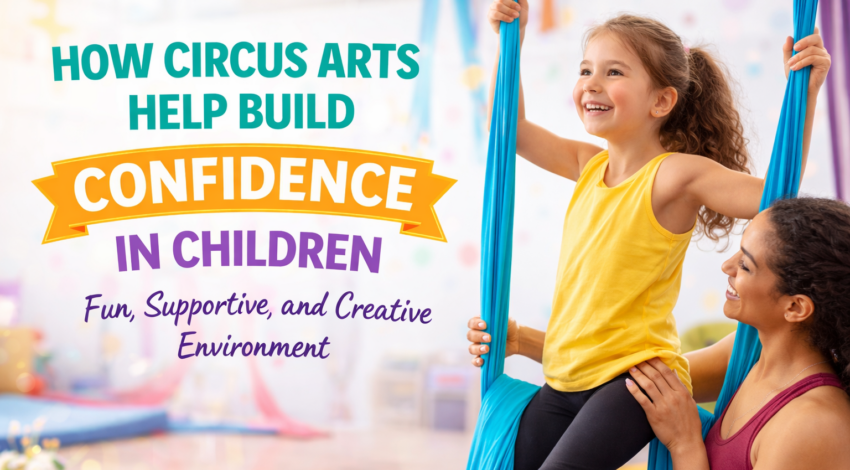
Every time a child learns a new circus skill—whether it’s climbing aerial silks or balancing—they experience a sense of achievement.
These small victories build a strong foundation of self-belief.
Over time, children start to think:
“If I can do this, I can do other things too.”
2. Overcoming Challenges Develops Resilience
Circus arts are not always easy—and that’s a good thing.
When children struggle with a move but keep trying, they learn persistence. They understand that progress takes time and effort.
This helps them develop resilience, which carries over into school and everyday life.
3. Performance Builds Confidence
Many circus programs include opportunities to perform.
Standing in front of an audience—even in a small showcase—helps children overcome stage fear and express themselves confidently.
It’s not about perfection—it’s about showing up and trying.
4. Encourages Self-Expression
Circus arts combine movement with creativity.
Children are not just following instructions—they’re expressing themselves through performance, movement, and imagination.
This helps them feel seen, valued, and confident in who they are.
5. Supportive Environment Makes a Big Difference
One of the most powerful aspects of circus training is the community.
Instructors and peers create an encouraging atmosphere where:
- Effort is celebrated
- Progress is recognized
- Everyone supports each other
This positive environment plays a huge role in boosting a child’s confidence.
Physical Confidence Leads to Mental Confidence
As children become stronger, more flexible, and more coordinated, they start to feel more comfortable in their own bodies.
This physical confidence directly impacts their mental confidence.
They move differently, think differently, and carry themselves with more assurance.
Why Parents Are Choosing Circus Arts
More parents are now choosing circus arts because it offers a balance of:
- Physical activity
- Creative expression
- Personal development
It’s not just another class—it’s an experience that helps children grow in multiple ways.
Give Your Child the Confidence to Shine
Every child has potential—it just needs the right environment to grow.
Circus arts provide that environment.
At The Circus Arts Place, children are guided, supported, and inspired to become more confident, capable, and expressive individuals.
Ready to Get Started?
If you’re looking for an activity that builds both skills and confidence, circus arts might be the perfect choice for your child.
Join a class and watch them grow—physically, creatively, and emotionally.